In Short: Why Is Nobody Using Power BI?
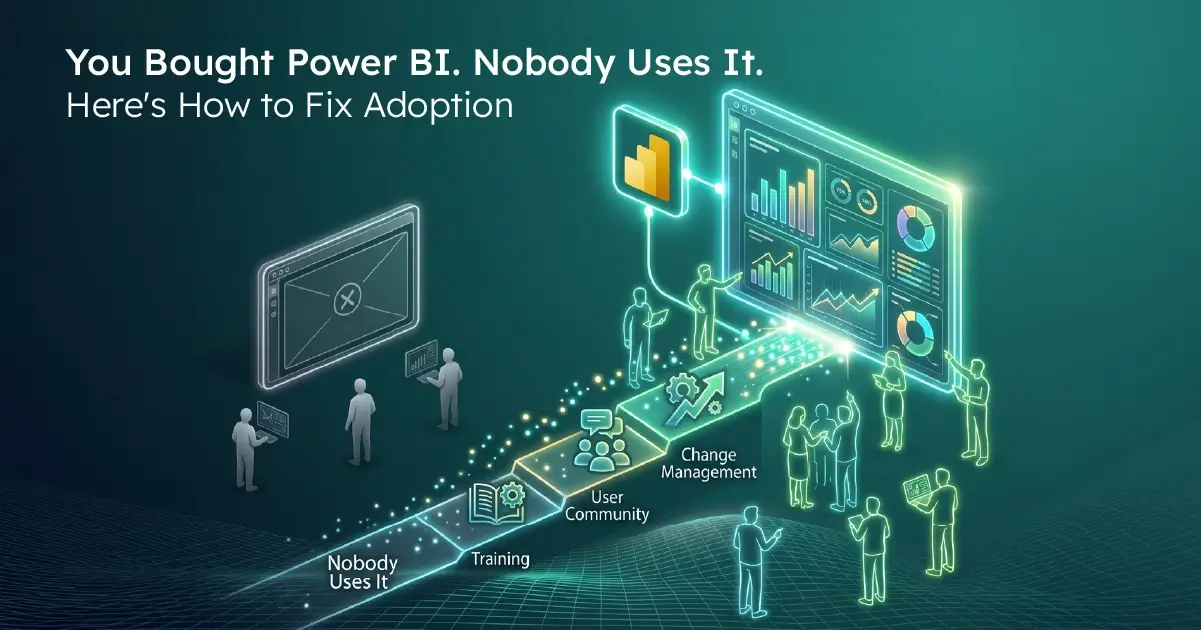
Because licences grant access, not ability - and most rollouts stop at access. Adoption stalls when users were never properly trained, when reports don't match the decisions people actually make, when the numbers aren't trusted or findable, and when nothing pulls people away from Excel. The fix is a recognisable set of moves: role-shaped training on your own data, a governed self-service layer worth using, reports rebuilt around real decisions, champions in each team, and leaders who run meetings from the live dashboards.
The Rollout That Went Fine
The rollout went fine. Licences were purchased, workspaces created, a launch email sent. There may even have been a lunch-and-learn. Yet a year later, the usage report tells the real story: a handful of dashboards opened regularly by a handful of people - and everyone else still living in Excel, still emailing spreadsheets, still asking the BI team to "just pull the numbers."
You're paying for a modern analytics platform. You're getting a PDF replacement.
This is the adoption gap, and it's remarkably common - not because Power BI is hard to like, but because most rollouts skip the part that actually creates usage.
Why Adoption Stalls
Tools were deployed; capability wasn't. A licence grants access, not ability. Most users got, at best, a one-hour intro - enough to open a dashboard, not enough to answer their own next question. When the tool can't help them past the first hurdle, they return to what works: Excel and a request to the BI team.
The reports didn't match the work. Dashboards designed centrally, without the people who'd use them, answer the questions the builders imagined rather than the ones managers actually ask on a Tuesday. Reports that don't drive real decisions get opened twice: once at launch, once by accident.
The data wasn't trusted or found. If the numbers in Power BI don't match the spreadsheet someone already believes, the spreadsheet wins. If nobody knows which of the forty workspaces holds the certified dataset, searching loses to asking. Trust and findability are adoption features, not governance afterthoughts.
Nothing pulled people in. Adoption is a habit change, and habit change needs pull: leaders using the dashboards in meetings, champions in each team, a visible path for a curious user to become a capable one. Send a launch email and walk away, and the old habits quietly win.
Here's the note of hope in all this: none of these causes is about the technology. Which means the licence spend isn't wasted - it's dormant.
What Good Looks Like: Capability, Trust, and Pull
Organisations where Power BI genuinely takes hold do a recognisable set of things:
Training that's role-shaped, not generic. Executives need to consume and interrogate; managers need to explore and filter; analysts need to model and build. One-size training serves nobody. Effective enablement runs tracks by role, uses your data rather than demo datasets, and is spaced over weeks so learning lands next to real work.
A governed self-service layer worth using. Certified datasets with agreed definitions, clearly marked, easy to find - so a manager exploring data builds on trusted foundations instead of creating a new version of the truth. Self-service without governance creates chaos; governance without self-service creates a bottleneck; adoption needs both at once.
Reports rebuilt around decisions. The fastest adoption fix is often unglamorous: sit with the teams, find the decisions they make weekly, and reshape the reports to serve exactly those. A dashboard that answers Tuesday's question gets opened every Tuesday.
Champions and mentorship. A trained enthusiast inside each department beats an outside trainer every time. Building that network - and backing it with expert mentorship for the harder problems - is how capability compounds after the formal training ends.
Leadership that uses the front door. The single strongest adoption signal in any organisation: when the monthly meeting runs from the live dashboard, not from a pasted-in screenshot. People adopt what their leaders visibly rely on.
How to Get There
1. Read your usage data honestly. Power BI tells you exactly who uses what. Find the pockets of genuine use - they show you what "working" looks like locally - and the deserts, which show you where to start.
2. Fix trust first. If numbers are disputed, no training programme will save you. Certify the core datasets and align the definitions before scaling the enablement - if this is your biggest gap, start with our work on single-source-of-truth reporting.
3. Run a proper enablement programme. Role-based workshops on your own data, spaced over 6-12 weeks, paired with report rebuilds for two or three high-visibility teams. Capability and relevance, delivered together.
4. Institutionalise the habit. Champions named, office hours running, leadership meetings switched to live dashboards. Adoption is finished when the old way feels strange.
Where Solv Systems Comes In
Training and enablement is a first-class service at Solv Systems - not an afterthought bolted to a build. Our Power BI & Fabric Training practice delivers role-based workshops, hands-on technical mentorship, and structured skills transfer, and because we're also the team that builds governed platforms, we fix the trust and findability problems alongside the capability ones. That combination matters: training on top of untrusted data fails, and governed data without trained users sits idle.
Skills transfer is genuinely how we prefer to work - our stated goal in every engagement is to leave your team more capable, not more dependent. Clients notice: verified reviewers describe our consultants as "knowledgeable, responsive, and practical," focused "on outcomes rather than just technical delivery."
The outcome we aim for is specific and measurable: more people answering their own questions, fewer requests queuing at the BI team, and leadership meetings running from live, trusted dashboards - the licence spend finally doing what it was bought to do.
Turn Licences Into a Data Culture
If your Power BI investment is mostly dormant, the gap between what you're paying for and what you're getting is closable - usually within a quarter.
Our Power BI & Fabric training team will look at your actual usage picture, diagnose where adoption is stalling, and map an enablement programme that fits your organisation.
Sources and Further Reading
Frequently asked
Usually a combination of four causes: users were never trained beyond a basic intro, the reports don't match the decisions people actually make, the numbers aren't trusted or easy to find, and nothing actively pulls people away from their Excel habits. None of these is a technology problem - which means the licence spend isn't wasted, it's dormant.
Power BI's built-in usage metrics show exactly who opens what, how often, and for how long. Genuine adoption looks like broad, recurring use tied to real decisions - not a handful of dashboards opened by the BI team. The usage report is the honest starting point for any adoption programme.
Different tracks for different jobs: executives learn to consume and interrogate dashboards, managers learn to explore and filter, analysts learn to model and build. The best programmes run on your organisation's own data rather than demo datasets, and are spaced over 6-12 weeks so learning lands next to real work.
A setup where users can freely explore and build on certified datasets - datasets with agreed definitions, clearly endorsed, easy to find - so self-service builds on trusted foundations instead of creating new versions of the truth. Self-service without governance creates chaos; governance without self-service creates a bottleneck.
A trained enthusiast inside each department who becomes the local go-to for questions, examples, and encouragement. Champions beat outside trainers for day-to-day adoption because they know the team's data and decisions - and they keep capability compounding after formal training ends.
Typically within a quarter. A focused programme - fix trust in the core datasets, run role-based training, rebuild reports for two or three high-visibility teams, and get leadership running meetings from live dashboards - shows measurable usage change within weeks.