In Short: How Long Does a Power BI Project Take?
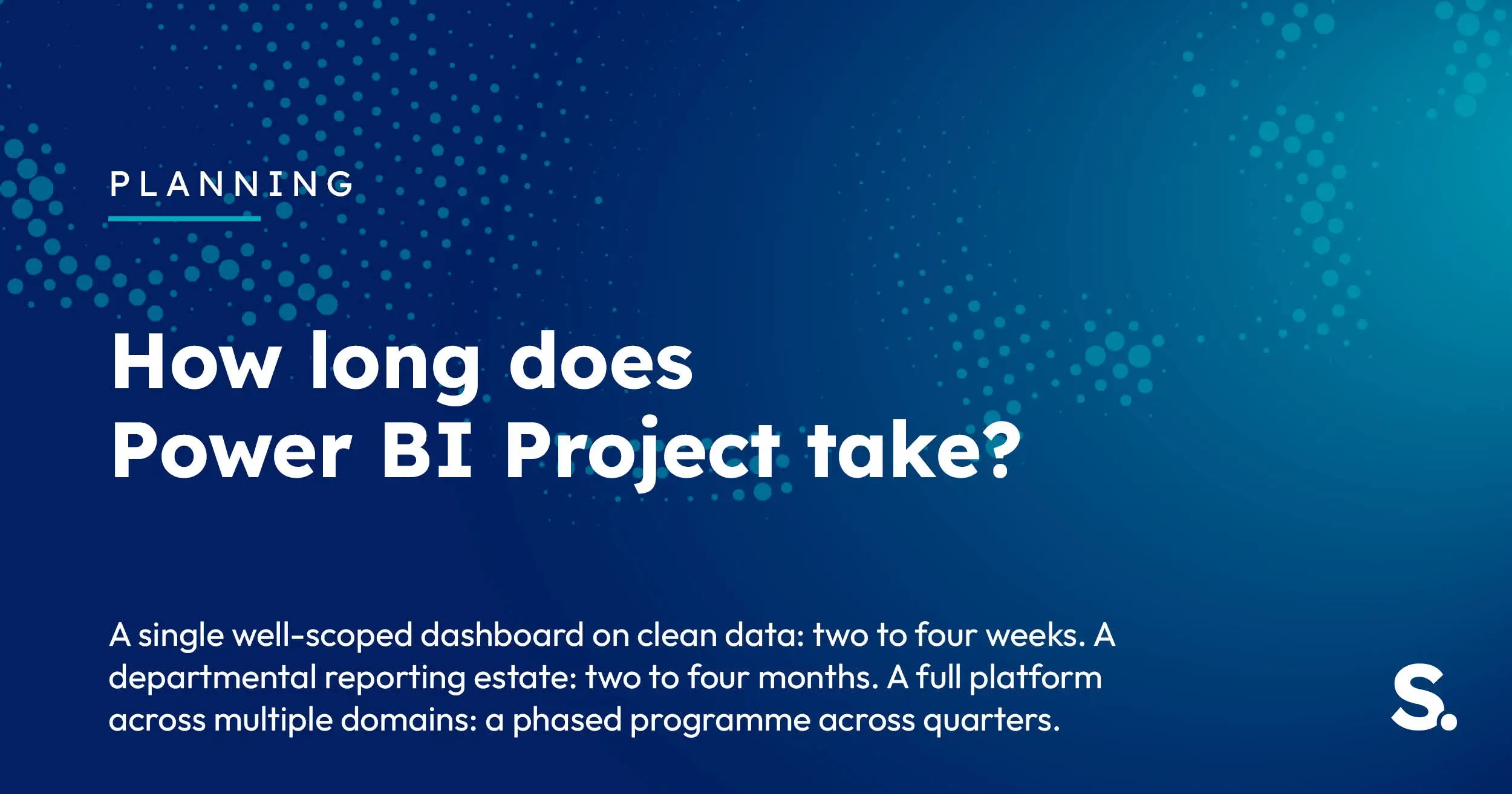
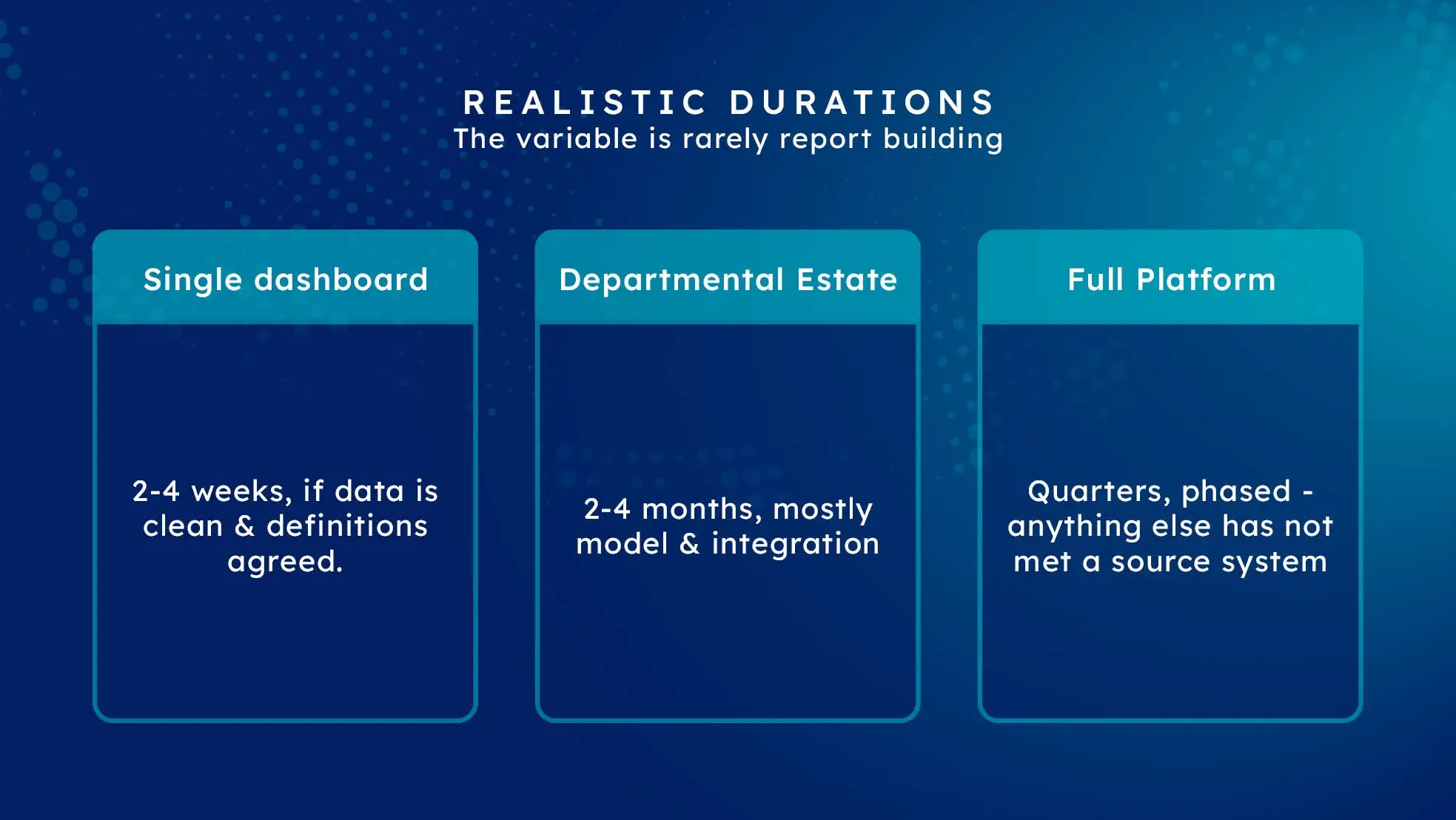
A single well-scoped dashboard on clean data: two to four weeks. A departmental reporting estate: two to four months. A full platform across multiple domains: a phased programme across quarters. The variable is almost never report building. It is the condition of your source data and how many people have to agree what the numbers mean.
What Actually Drives the Timeline
Clients estimating internally usually count reports. Reports are the visible part and the smaller part - typically a third of the effort or less.
Three things drive duration, in order:
Source data condition. Clean, documented sources with stable schemas move fast. Sources with inconsistent identifiers, no documentation and undocumented business rules embedded in them do not. This is the single largest variable and the hardest to assess before starting.
Definitional agreement. If finance, sales and operations have never formally agreed what "revenue" or "active customer" means, that conversation happens during your project. It is valuable and it takes time - and it takes longer with more stakeholders.
Access. Getting credentials and network access to source systems routinely takes weeks in larger organisations. It is nobody's priority except yours, and it blocks everything.
Notice that none of these are technical difficulty. Experienced developers reduce risk in the build; they do not shorten the parts above.
Realistic Ranges
A single dashboard, clean source, agreed definitions: 2-4 weeks. Includes discovery, build, validation and a round of feedback. Faster than this usually means someone else already did the foundation work.
A departmental estate - several related reports, a few sources, one governed model: 2-4 months. Most of it is the model and the integration; the reports come quickly once that exists.
A platform - Fabric underneath, multiple domains, governance and security designed in: quarters, phased. Anything presented as a single delivery date at this scale is a plan that has not met a source system yet.
A migration from another tool scales with the number of dashboards and how much logic sits in the old platform - see Tableau and Qlik.
The Two-Thirds Rule
In most projects, the data foundation is two thirds or more of the total effort. Integration, conforming, modelling, quality rules, security.
The reports are the third that everyone sees, which is why:
- Estimates built from report counts underrun consistently.
- Progress feels slow until suddenly it does not - nothing visible exists for weeks, then several reports appear in days.
- Cutting scope by removing reports saves less than people expect. Cutting a source system saves considerably more.
Worth explaining to stakeholders at the start, because week four of a foundation-heavy project is when confidence wobbles.
What Discovery Should Establish
A good discovery reduces variance more than good developers do. It should answer:
- Which sources, and what condition are they in? Someone should actually query them, not read a description.
- Are the definitions agreed, and by whom? If not, that is a workstream.
- How long will access take? Ask the person who grants it, not the person who requested it.
- Who decides when there is a disagreement? One name.
- What does success look like in business terms? Not "a dashboard" - a decision made differently.
Any estimate given before these are answered is a guess with a number attached. Be sceptical of a firm quotation offered before anyone has looked at your data - see what a consultant actually does.
Does Fabric Make It Faster?
Somewhat, and less than the marketing suggests.
Fabric removes work that used to involve assembling several separate services - provisioning, wiring integration, managing infrastructure. That is real time saved, and it is engineering time.
It does not improve your source data, and it does not shorten the definitional conversations. Since those are the two largest variables, expect a modest reduction in the build rather than a transformed schedule.
How to Make It Go Faster
Three things, all on the client side, all worth more than anything the delivery team controls:
Agree definitions before the project starts. Even roughly. Walking in with a written definition of your top ten metrics can remove weeks.
Start the access request now. Before contracts, if possible. It is the most common cause of a slow first fortnight.
Appoint one decision-maker. Someone empowered to settle a definitional dispute in a meeting rather than referring it onward. Projects with a committee instead of a decision-maker take substantially longer, and the difference shows up in weeks three through six.
Where Solv Systems Comes In
We scope against your actual source systems rather than a template, which occasionally means telling someone their project is larger than they hoped - usually because a source is in worse condition than the description suggested.
We deliver Power BI projects in phases that each ship something usable, so you are never waiting a quarter to see whether it is working. And we are straight about what is driving the timeline, including when the answer is a decision on your side rather than work on ours.
Sources and Further Reading
Frequently asked
A single well-scoped dashboard on clean data: two to four weeks. A departmental reporting estate: two to four months. A full platform with Fabric underneath and multiple domains: a phased programme across quarters. The variable is rarely report building - it is source data condition and the number of stakeholders who must agree definitions.
Three things, consistently: source data worse than discovery suggested, definitions nobody had agreed before the project started, and access to source systems taking weeks to arrange. None are technical difficulties and all are predictable, which is why good discovery reduces variance more than good developers do.
A report, often yes. A trustworthy report, only if the data is already clean and the definitions already agreed. Fast delivery is usually a sign that someone else already did the hard part - or that the reconciliation conversation is still ahead of you.
In most projects the foundation is the majority of the effort - commonly two thirds or more. Reports are the visible part and the smaller part, which is why projects estimated from report count are the ones that overrun.
It removes integration and infrastructure work that used to be assembled from separate services, which helps. It does not shorten the definitional conversations or improve your source data. Expect a modest reduction in engineering time, not a transformed timeline.
Agree metric definitions before the project starts, arrange source system access early, and give the project one decision-maker who can settle disputes. Those three things move timelines more than anything the delivery team controls.